


By Dr. Michael Sokoloff
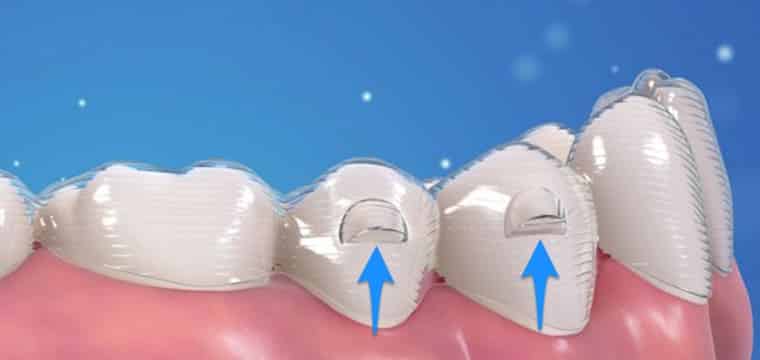
Invisalign attachments are small, tooth-colored shapes bonded to certain teeth to help clear aligners grip better and move teeth more precisely. They are common in Invisalign treatment and are often used when a tooth needs more control than the aligner can provide on its own. At Michael Sokoloff Orthodontics, Invisalign attachments are planned as part of your digital treatment setup so your aligners can work more efficiently and predictably.
What Are Invisalign Attachments?
Invisalign attachments are tiny composite shapes placed on the surface of selected teeth. They are made from tooth-colored dental material, so they usually blend in with your smile.
Think of them as handles for your aligners. The aligner snaps over the attachments and uses them to apply more accurate pressure to the teeth. This helps guide certain movements that may be harder to achieve with a smooth aligner alone.
Attachments may be placed on front teeth, back teeth, or both, depending on your treatment plan.
Why Are Invisalign Attachments Needed?
Invisalign works by applying gentle pressure through a series of custom clear aligners. For simple movements, the aligner may be enough on its own. For more detailed movements, attachments help the aligner grip the tooth and move it in the right direction.
They may be used to help with:
- rotating teeth
- closing spaces
- correcting crowding
- moving teeth vertically
- improving aligner fit
- guiding more complex tooth movement
Without attachments, some teeth may not move as predictably. That is why they are often an important part of successful Invisalign treatment.
Invisalign Attachments on Front Teeth
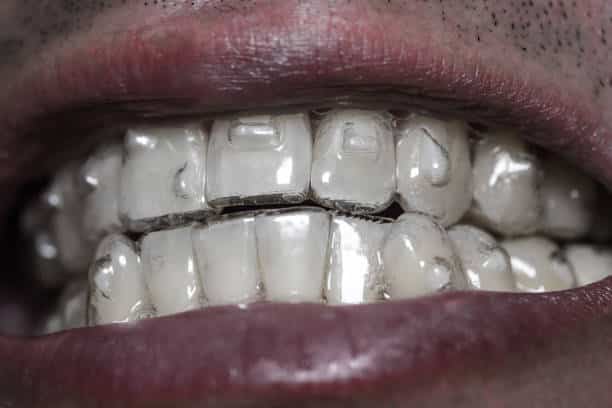
Many patients worry about Invisalign attachments to their front teeth because they assume the attachments will be obvious. In most cases, front-tooth attachments are small and tooth-colored, so they are much less noticeable than brackets.
They can still be visible up close, especially if they are placed on teeth that show when you smile. But for many patients, they are a reasonable tradeoff because they help the aligners move teeth more accurately.
If appearance is a major concern, your orthodontist can explain why each attachment is needed and where it will be placed before treatment begins.
Invisalign Buttons vs Attachments
Patients often ask about Invisalign buttons vs attachments, but they are not the same thing.
| Feature | Invisalign Attachments | Invisalign Buttons |
|---|---|---|
| What they are | Tooth-colored composite shapes bonded to teeth | Small button-like pieces used to hold elastics |
| Main purpose | Help aligners grip and move teeth | Help correct bite relationships with rubber bands |
| Visibility | Usually blends with the tooth | May be more noticeable depending on location |
| Used with elastics? | Not usually | Yes, when rubber bands are part of treatment |
Attachments help the aligner control tooth movement. Buttons are usually used when elastics are needed to help correct the bite.
Do Invisalign Attachments Hurt?
Getting attachments placed does not usually hurt. The tooth surface is prepared, the composite material is bonded, and the attachment is shaped to match the treatment plan.
You may feel pressure when your aligners first snap over the attachments, especially with a new tray. That pressure is usually a sign the aligner is working. Some patients also notice that removing aligners feels a little tighter at first because the trays grip the attachments more securely.
Most people adjust within a few days.
What Happens During Attachment Placement?
Attachment placement is usually simple and does not require numbing.
The process often looks like this:
- Teeth are cleaned and prepared
The selected teeth are prepared so the composite can bond properly. - A template aligner is placed
A special template helps position each attachment in the correct spot. - Composite material is added
Tooth-colored material is placed into the template. - The attachments are bonded
A curing light hardens the material onto the teeth. - Your aligners are checked
The aligners are placed to make sure they fit correctly over the new attachments.
Once they are on, you continue wearing your Invisalign trays as directed.
Can You Eat With Invisalign Attachments?
Yes. Attachments stay on your teeth while you eat, but your aligners should come out before meals. The attachments themselves are bonded to the teeth, so you do not remove them.
You should still be careful with very hard or sticky foods because an attachment can occasionally come loose. If one falls off, contact the office. Your orthodontist will decide whether it needs to be replaced right away or at your next visit.
Invisalign Attachments Before and After Treatment
When patients search for Invisalign attachments before and after, they are usually wondering whether attachments affect the final result or leave marks on the teeth.
Attachments are temporary. They are used during treatment to help achieve the planned tooth movements, then removed when they are no longer needed. Their purpose is to help produce a better final smile, not change the tooth permanently.
After attachment removal, the teeth are polished so the surface feels smooth again.
Invisalign Attachments Removal
Invisalign attachment removal is usually quick and comfortable. The orthodontist removes the composite material from the teeth and polishes the enamel surface.
The attachments are not pulled off like brackets. Instead, the material is carefully smoothed away. Patients usually do not need numbing, and the teeth should feel normal again once the surface is polished.
If you are finishing treatment, this is often one of the final steps before moving into retainers.
How to Care for Teeth With Attachments
Attachments can make small areas around the teeth easier for plaque to collect, so brushing well matters.
To keep your teeth clean during Invisalign treatment:
- brush after meals before putting aligners back in
- floss daily
- clean your aligners regularly
- avoid eating with aligners in
- check around attachments for buildup
- keep your scheduled visits
Good habits help keep your teeth healthy and your aligners clear throughout treatment.
Are Attachments Always Needed?
No. Not every Invisalign case requires attachments, but many do. Whether you need them depends on the type of movement your teeth need, the complexity of your case, and how your orthodontist plans your treatment.
Attachments are not a sign that treatment is going badly. In fact, they often help treatment work better from the beginning.
Invisalign Attachments Are Part of a More Precise Plan
Invisalign attachments may look small, but they can play a major role in how well your clear aligners work. They help aligners grip, guide, rotate, and move teeth with better control, especially when the movement is more complex.
At Michael Sokoloff Orthodontics, Dr. Michael Sokoloff helps patients understand why attachments may be recommended and how they fit into the overall Invisalign plan. If you are considering Invisalign or have questions about attachments, schedule a consultation to find out what your smile may need.
Frequently Asked Questions
Are Invisalign attachments noticeable?
They can be slightly noticeable up close, especially on front teeth, but they are tooth-colored and usually blend with your smile.
Do Invisalign attachments come off?
They can occasionally come loose, especially with hard or sticky foods. If that happens, contact your orthodontist to see whether it needs to be replaced.
Can Invisalign work without attachments?
Some simple cases may not need attachments, but many Invisalign cases use them for better control and more predictable movement.
Does Invisalign attachment removal hurt?
No. Removal is usually quick and comfortable. The composite material is smoothed away and the tooth surface is polished.
Are Invisalign buttons the same as attachments?
No. Attachments help aligners grip the teeth, while buttons are usually used to connect elastics for bite correction.
 Facebook
 Instagram
 Twitter