


Teenagers today have more orthodontic options than ever before. When parents begin researching treatment for their child, one of the most common questions they ask is about braces vs Invisalign and which option is better for their teen.
Modern orthodontics has evolved far beyond traditional metal braces. While braces remain a trusted and effective solution, clear aligner systems like Invisalign have introduced a more discreet alternative for teens who want to straighten their teeth without noticeable brackets and wires.
Both treatments can successfully correct many orthodontic issues, but they work differently and may suit different lifestyles. Understanding how each option works can help families choose the right orthodontic treatment for their teenager.
Why Orthodontic Treatment Is Important for Teenagers
Adolescence is one of the most common times for orthodontic care. During this stage of development, permanent teeth have typically come in, but the jaw is still growing. This makes it an ideal time to guide teeth and bite alignment into healthier positions.
Teen orthodontic treatment can provide several long-term benefits.
Correct Bite Alignment
Orthodontic treatment helps correct issues such as overbites, underbites, crossbites, and crowding. Proper bite alignment allows teeth to function more efficiently when chewing and speaking.
Improved Oral Health
When teeth are crowded or misaligned, they can be harder to brush and floss effectively. Straightening teeth makes it easier to maintain good oral hygiene and reduces the risk of cavities and gum disease.
Boosted Confidence
Teenagers are often very aware of their appearance. A straighter smile can increase confidence during school, social activities, and important milestones like photos or presentations.
Prevention of Future Problems
Orthodontic care during the teen years can prevent more serious dental problems later in life, including excessive tooth wear, jaw discomfort, and bite instability.
Because of these benefits, many families explore orthodontic options for teens during middle school or early high school years.
What Are Traditional Braces?
Traditional braces have been used for decades to correct tooth alignment and bite issues. They remain one of the most reliable and widely recommended orthodontic treatments.
Braces consist of several key components:
- Small brackets attached to the front of each tooth
- A thin archwire that connects the brackets
- Elastic bands that help guide tooth movement
The orthodontist adjusts the wire periodically to apply gentle pressure that gradually moves teeth into their proper position.
Many orthodontists continue to recommend braces for teens because they are extremely effective for correcting both simple and complex orthodontic problems. Braces are also fixed in place, meaning treatment continues working around the clock without relying on patient compliance.
While metal braces are the most common type, some teens may also have options such as ceramic braces that are less noticeable.
What Is Invisalign for Teens?
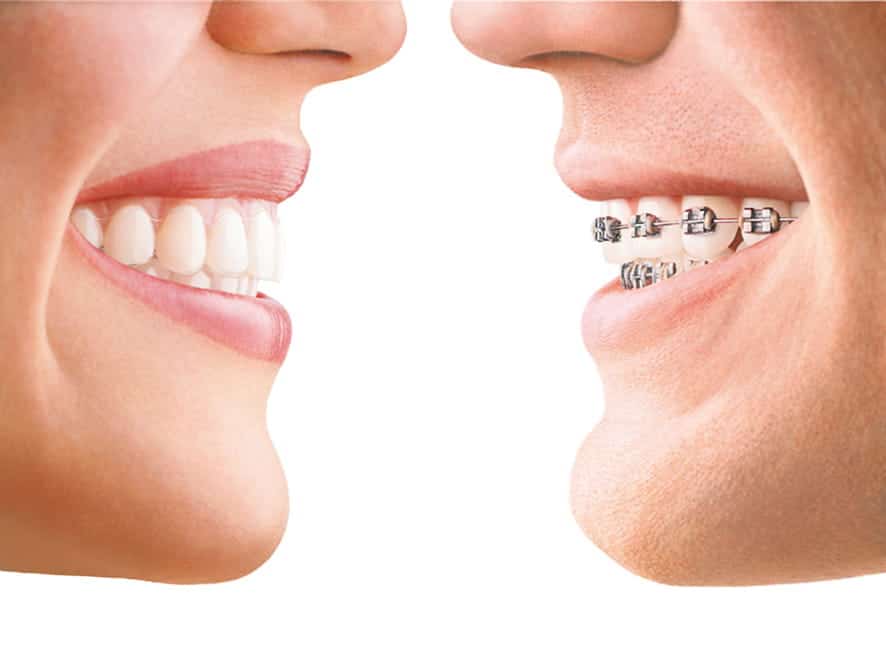
Invisalign is a modern orthodontic treatment that uses clear plastic aligners instead of brackets and wires. These aligners are custom-made using digital scans of the patient’s teeth.
During Invisalign Teen treatment, a series of aligners are worn in sequence. Each aligner gently shifts the teeth slightly closer to their final position.
Key features of Invisalign include:
- Transparent aligners that fit snugly over the teeth
- Digital treatment planning that maps out the entire process
- New aligners provided every one to two weeks
- The ability to remove aligners when eating or brushing
Because they are nearly invisible, Invisalign has become popular among teenagers who prefer a more discreet orthodontic solution.
However, aligners must typically be worn 20 to 22 hours per day to achieve the desired results.
Braces vs Invisalign: Key Differences
When comparing Braces vs Invisalign, several important factors can influence which option may work best for a teenager.
| Feature | Braces | Invisalign |
|---|---|---|
| Appearance | Visible brackets and wires | Nearly invisible clear aligners |
| Comfort | May cause irritation from brackets and wires | Smooth plastic aligners generally feel more comfortable |
| Effectiveness | Highly effective for simple to complex cases | Best for mild to moderate alignment issues |
| Effectiveness for Complex Cases | Ideal for severe crowding, bite issues, and jaw alignment | Limited for complex or severe orthodontic problems |
| Treatment Duration | Typically 18–24 months (varies by case) | Typically 12–18 months (for mild to moderate cases) |
| Cost Range | Generally $3,000–$7,000 depending on treatment | Often $3,500–$8,000 depending on complexity |
| Maintenance | Fixed to teeth and cannot be removed | Removable for eating, brushing, and flossing |
| Compliance Requirements | No patient compliance needed since braces are fixed | Requires wearing aligners 20–22 hours per day |
| Lifestyle Impact | Some food restrictions (avoid sticky or hard foods) | Fewer restrictions since aligners are removable |
| Appointment Frequency | Regular adjustments every 4–8 weeks | Fewer in-office visits, typically every 6–10 weeks |
| Oral Hygiene Difficulty | More challenging to brush and floss around brackets | Easier to maintain oral hygiene since aligners are removable |
Appearance
Braces are more noticeable because brackets are attached to the teeth. Invisalign aligners are clear and discreet, making them a preferred option for teens concerned about appearance.
Comfort
Braces may occasionally cause irritation to the lips or cheeks, especially after adjustments. Invisalign aligners are smooth plastic and often feel more comfortable.
Effectiveness
Both treatments can deliver excellent results, but braces are often better for complex orthodontic cases that require significant tooth movement.
Maintenance
Braces remain attached to the teeth, so teens must carefully clean around brackets. Invisalign aligners can be removed for brushing and flossing, making oral hygiene easier.
Lifestyle Impact
Braces may require avoiding certain foods such as sticky candy or hard snacks. Invisalign aligners allow teens to eat normally because they are removed during meals.
Advantages of Braces for Teenagers
Despite the popularity of clear aligners, braces for teens still offer several important advantages.
Effective for Complex Cases
Braces can treat a wide range of orthodontic concerns, including severe crowding, bite problems, and significant tooth rotations.
Continuous Treatment
Because braces are fixed in place, they work continuously. There is no risk of forgetting to wear them or leaving them out too long.
Durable and Reliable
Braces are designed to stay securely attached throughout treatment. Teens cannot lose them the way removable aligners might be misplaced.
For these reasons, many orthodontists recommend braces when a teen’s orthodontic needs are more complex.
Advantages of Invisalign for Teenagers
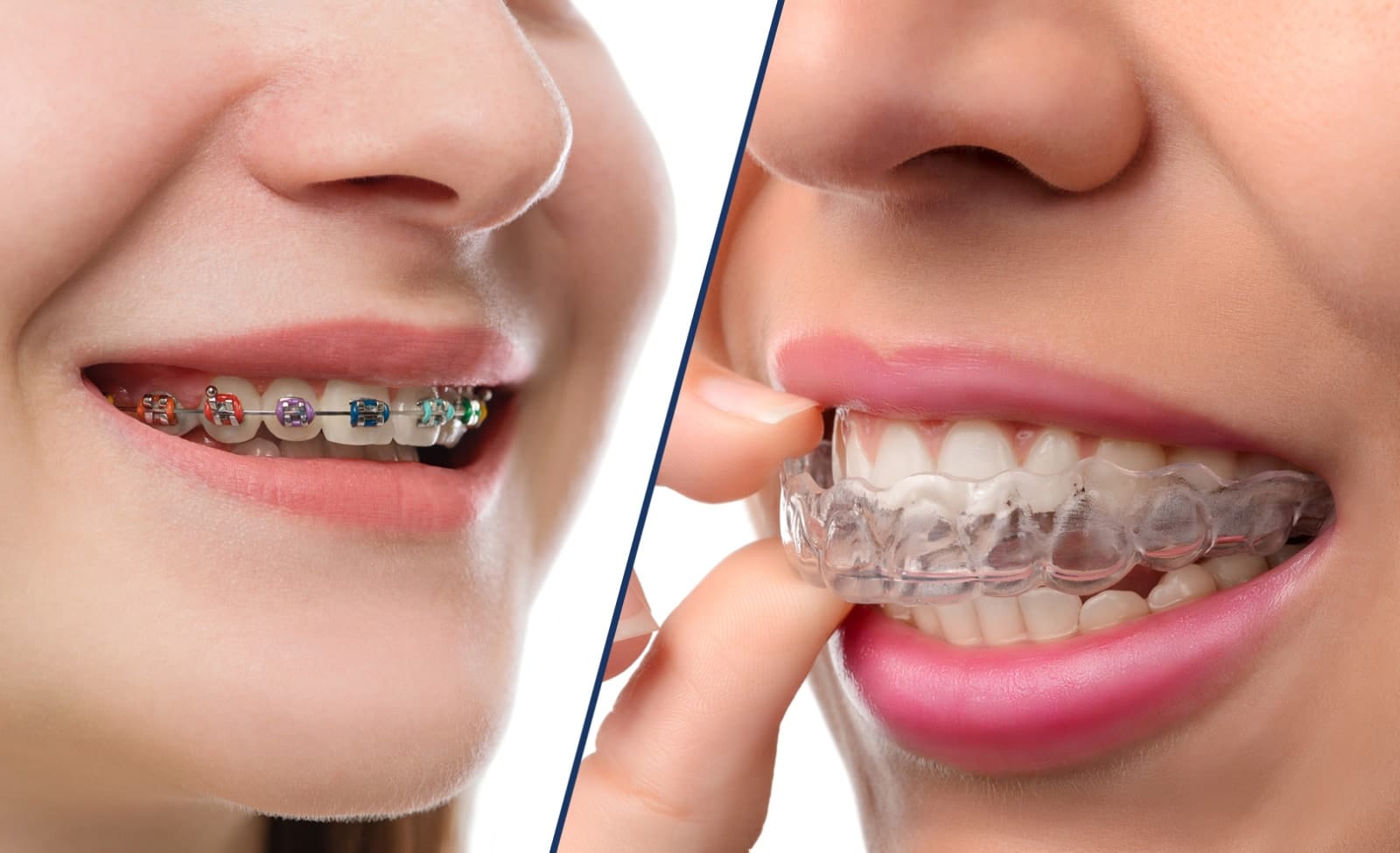
For teens who qualify, clear aligners for teenagers provide several appealing benefits.
Nearly Invisible Treatment
The clear aligners are very difficult to notice, allowing teens to feel more confident during school, sports, and social activities.
Removable Design
Aligners can be removed for eating, brushing, and flossing. This helps maintain better oral hygiene during treatment.
Comfortable Fit
Invisalign aligners are made from smooth plastic and do not include brackets or wires that may irritate soft tissues.
Fewer Lifestyle Restrictions
Since aligners are removed for meals, teens can continue enjoying their favorite foods without worrying about damaging orthodontic appliances.
File name: braces-vs-invisalign-for-teenagers
Alt text: Teen orthodontic treatment
Which Option Is Best for Your Teen?
Choosing between braces and clear aligners ultimately depends on several factors.
Some teens benefit most from traditional braces, especially if their orthodontic needs involve more complex tooth movements. Others may be excellent candidates for Invisalign if their alignment issues are mild to moderate.
Important factors to consider include:
- The severity of the orthodontic problem
- A teen’s responsibility level for wearing aligners consistently
- Personal preferences about appearance
- Lifestyle and activities
- Professional guidance from an orthodontist
A consultation with a qualified teen orthodontist can provide a detailed evaluation and help determine the most effective treatment option.
Meet the Orthodontists
Dr. Michael Sokoloff
Dr. Michael Sokoloff is a trusted orthodontist serving patients in White Plains, New York. He earned his Doctor of Dental Surgery degree from the SUNY Buffalo School of Dental Medicine and later completed his orthodontic specialty training at Tufts University.
Dr. Sokoloff has been practicing orthodontics since 2001 and founded his private orthodontic practice in 2004. Throughout his career, he has remained committed to providing high-quality orthodontic care using modern technology and personalized treatment planning.
He has been recognized by his peers as one of the Top Dentists in Westchester County in Westchester Magazine for multiple years. Known for his compassionate and patient-centered approach, Dr. Sokoloff focuses on helping patients of all ages achieve healthier, more confident smiles.
Dr. Sokoloff is also an active member of several professional dental organizations and continues to stay current with advances in orthodontic care.
Dr. Matt Campbell
Dr. Matt Campbell joined the practice in 2021 and shares the same dedication to patient-focused orthodontic care.
He earned his Doctorate in Dentistry from the Temple University Kornberg School of Dentistry. After dental school, Dr. Campbell completed his orthodontic specialty training at Temple University, where he gained extensive experience in modern orthodontic treatment techniques.
Dr. Campbell is passionate about helping patients feel confident in their smiles. He enjoys building relationships with families and guiding teenagers through their orthodontic journey.
Orthodontic Care for the Westchester Community
Michael Sokoloff Orthodontics proudly serves families throughout the Westchester County area. Patients visit the practice from nearby communities seeking personalized orthodontic care and advanced treatment options.
Communities served include:
- Elmsford, NY
- Westchester, NY
- Scarsdale, NY
Families from these areas trust the practice for comprehensive orthodontic care designed for children, teenagers, and adults.
FAQs
Is Invisalign better than braces for teenagers?
Invisalign can be an excellent option for teenagers who have mild to moderate orthodontic issues and are responsible enough to wear their aligners consistently. However, braces may be more effective for complex bite or alignment problems. The best option depends on the individual patient’s orthodontic needs.
How long does teen orthodontic treatment usually take?
Most orthodontic treatments for teens take between 12 and 24 months. The exact timeline depends on the complexity of the case and how well treatment instructions are followed. Regular orthodontic visits help ensure progress stays on schedule.
Are braces or Invisalign more comfortable?
Invisalign aligners are generally considered more comfortable because they are smooth and do not include brackets or wires. However, both braces and Invisalign can cause mild soreness when teeth are shifting. This discomfort usually fades within a few days.
Can teens remove Invisalign aligners anytime?
Yes, Invisalign aligners can be removed for eating, brushing, and flossing. However, they should be worn 20 to 22 hours each day for the treatment to work effectively. Removing aligners too often can slow down progress.
Which orthodontic option is more affordable?
The cost of braces and Invisalign is often similar, though it can vary depending on the complexity of treatment. Many orthodontic practices offer flexible payment plans and work with insurance providers to make treatment more accessible.
Schedule a Consultation for Your Teen
Choosing between braces and Invisalign can feel overwhelming, but the right orthodontic guidance can make the decision easier. Every teen’s smile is unique, and the best treatment option depends on their specific orthodontic needs.
At Michael Sokoloff Orthodontics, our team provides personalized evaluations and customized treatment plans designed to create healthy, confident smiles.
If your family is exploring orthodontic care for a teenager, schedule a consultation today to learn whether braces or Invisalign may be the best choice for your child.
Tags: braces, invisalign, Invisalign vs Braces Facebook
 Instagram
 Twitter