


Wearing braces is one of the most effective ways to achieve a healthy, straight, and confident smile—but they also require a little extra care, especially during meals. Getting food stuck in braces is extremely common, whether you’re new to orthodontic treatment or nearing the end of your journey. While it can feel uncomfortable or embarrassing, the good news is that with the right techniques, you can remove food safely, keep your braces clean, and protect your oral health.
At Michael Sokoloff Orthodontics, a trusted orthodontist in White Plains, our goal is to help every patient feel confident and prepared throughout treatment. Whether you’re wearing traditional braces in White Plains, NY, clear ceramic braces, or Invisalign, understanding how to get food out of braces the right way is essential.
In this guide, our experienced orthodontists, Dr. Michael Sokoloff and Dr. Matt Campbell, share practical, effective tips to keep your smile—and your braces—clean and healthy every day.
Why Food Gets Stuck in Braces So Easily
Braces create small spaces and angles where food particles can easily settle. Even soft foods can cling to brackets and wires.
Common foods that tend to stick include:
- Bread, tortillas, and soft pastries
- Rice and pasta
- Leafy greens
- Meat fibers
- Seeds and nuts
- Sticky snacks
While this is completely normal, allowing trapped food to stay between your teeth and braces can lead to:
- Bad breath
- Plaque buildup
- Gum inflammation
- Tooth staining
- Longer cleaning times
- Higher cavity risk
That’s why learning effective techniques for how to remove food stuck in braces is essential for every patient in orthodontic treatment.
1. Start With a Thorough Rinse
Before you try anything else, start with one of the easiest and most effective steps: rinsing your mouth with warm water.
A few slow swishes can help loosen:
- Rice
- Bread crumbs
- Soft vegetable pieces
- Smaller pasta particles
Why warm water?
Warm water helps soften food debris, making it easier to release from brackets and wires. This is a safe, gentle first step that avoids damaging your braces.
If you want a deeper clean, you can rinse with:
- A saltwater solution
- Alcohol-free mouthwash
- An orthodontic-safe cleanser recommended by your provider
This simple step already solves around half of the issues patients experience when cleaning food from braces.
2. Use an Interdental Brush for Hard-to-Reach Spots
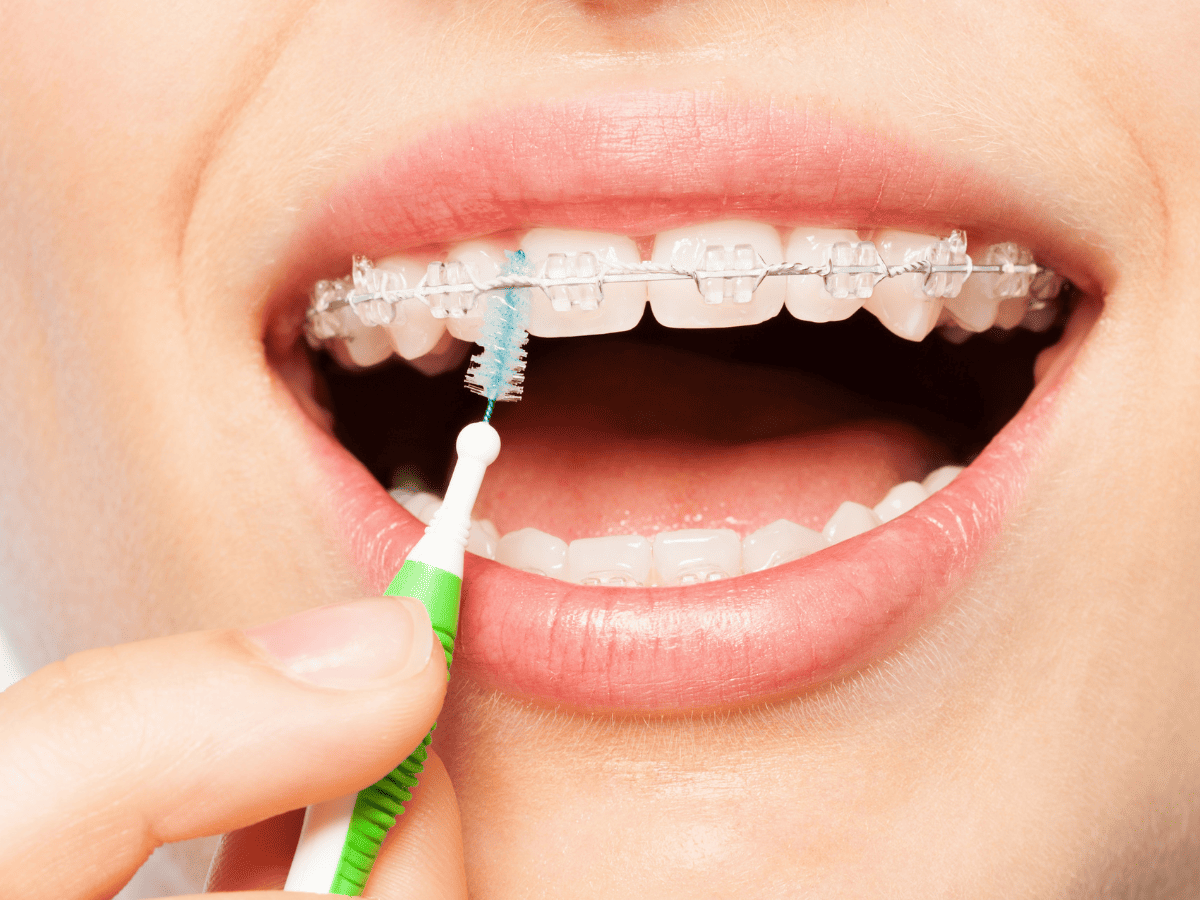
An interdental brush, sometimes called a proxy brush, is one of the best tools for cleaning food from braces. It’s small, flexible, and designed to slip between wires and brackets without causing damage.
How to Use It Correctly:
- Hold the brush at a slight angle.
- Gently guide it under the wire.
- Move slowly back and forth.
- Repeat in every area where food tends to get trapped.
These brushes are especially helpful after eating:
- Chicken
- Spinach
- Soft tacos
- Noodles
They’re small enough to keep in your bag, making them perfect for school, work, or travel.
3. Use Dental Floss With a Floss Threader
Traditional floss alone can’t slide under braces wires, which is why orthodontists recommend using a floss threader or ortho flossers.
Steps to Follow:
- Insert the floss into the threader.
- Guide it gently under the archwire.
- Floss between your teeth just like you normally would.
- Repeat in each space.
For patients new to braces, flossing may feel time-consuming at first. But with practice, you’ll learn to remove stubborn food particles efficiently—especially meat fibers or trapped tortilla or bread pieces.
This method is also one of the best ways to prevent gum inflammation and ensure good oral hygiene throughout treatment.
4. Try an Orthodontic Water Flosser
A water flosser uses a stream of water pressure to remove food particles from areas that traditional tools can’t reach easily.
Benefits:
- Highly effective for most patient
- Gentle on gums
- Reaches deep around brackets and wires
- Helps reduce plaque buildup
- Keeps your mouth feeling fresh
Using a water flosser after meals is one of the most recommended techniques by orthodontists for how to get food out of braces safely and comfortably.
While not required, it can significantly improve oral hygiene, especially for patients with busy schedules or tightly spaced teeth.
5. Use Orthodontic Wax Wisely
Wax won’t remove food, but it can cover irritating brackets or wires so food is less likely to collect in painful areas.
For example:
- Poking wires
- Irritating brackets
- Sharp areas catching foods like bread or tortillas
Applying a small amount of wax creates a smooth surface, reducing the risk of debris getting stuck in uncomfortable spots.
6. Brush Carefully After Meals
Brushing remains one of the easiest and most effective steps in cleaning food from braces.
Best Practices:
- Use a soft-bristle toothbrush.
- Angle the brush above and below the braces.
- Brush for a full two minutes.
- Use a fluoride toothpaste.
Brushing removes most food particles, especially:
- Sticky sauces
- Soft bread
- Mashed vegetables
- Small seeds
When brushing is done correctly, it protects your teeth from plaque and reduces staining around brackets.
7. Choose Foods That Are Braces-Friendly
While you don’t need to avoid all your favorite foods, certain choices make mealtimes easier.
Easier-to-Clean Food Options:
- Soft-cooked vegetables
- Cut fruit instead of biting directly.
- Tender meats
- Smooth pastas
- Rice dishes
- Soups
- Yogurt and smoothies
Choosing braces-friendly foods makes cleaning faster and keeps your teeth protected.
If you’re ever unsure which foods to avoid or modify, our orthodontists can guide you during your visits at our White Plains, NY office.
8. Avoid Using Sharp Objects to Remove Food
Some patients try using:
- Toothpicks
- Safety pins
- Fingernails
- Metal objects
These objects can bend wires or snap brackets, which may prolong treatment.
The safest methods are always:
- Rinsing
- Interdental brushes
- Flossers
- Water flossers
- Soft-bristle toothbrushes
When in doubt, contact your orthodontic team for guidance.
9. Keep a Portable Braces Cleaning Kit With You
If you’re active, at school, or at work, having a small cleaning kit can make life much easier.
Include:
- Travel toothbrush
- Interdental brushes
- Floss threaders
- Orthodontic wax
- Travel-size mouth rinse
This kit helps you quickly manage trapped food and maintain good hygiene throughout the day.
10. Know When to Contact Your Orthodontist
Food stuck in braces is normal, but if you experience any of the following, contact Michael Sokoloff Orthodonticsright away:
- A piece of food is deeply lodged and won’t come out.
- Your gums feel painful or swollen.
- A wire is poking you.
- A bracket feels loose.
- You notice bleeding after cleaning.
Our orthodontists, Dr. Michael Sokoloff and Dr. Matt Campbell, are here to ensure your treatment remains safe, comfortable, and effective.
The Importance of Keeping Your Braces Clean
Good hygiene doesn’t just protect your teeth—it also supports successful orthodontic treatment. Clean braces help prevent:
- Cavities
- Gum irritation
- Demineralization around brackets
- Unwanted staining
- Delays in treatment progress
Your orthodontic team will monitor your oral hygiene at every visit and provide personalized guidance to help you succeed.
To learn more about orthodontic care or explore services like Braces, visit our internal resource.
Conclusion: A Clean Smile Helps You Get the Best Results
Learning how to get food out of braces is one of the most important skills during orthodontic treatment. With the right tools and daily habits, keeping your braces clean becomes easy, comfortable, and stress-free.
At Michael Sokoloff Orthodontics in White Plains, NY, we’re committed to making your orthodontic experience smooth, positive, and successful. Whether you wear traditional braces, clear braces, or Invisalign, our team is always here to support you with expert guidance and compassionate care.
Need help with your braces or want to schedule an appointment? Contact our team at (914) 256-1344—we’re always ready to assist you.
 Facebook
 Instagram
 Twitter